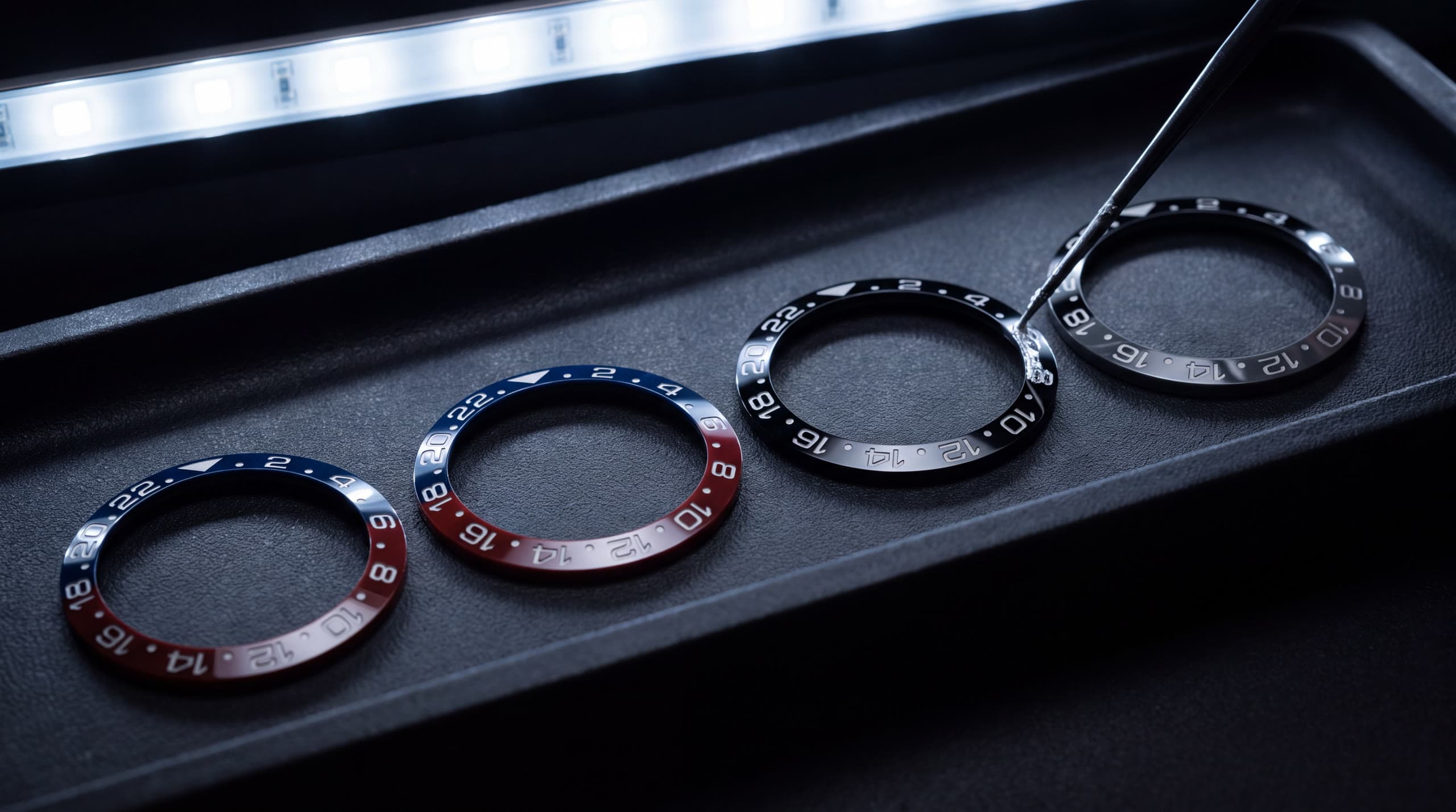
Material 01
Ceramic
ZrO₂ · 1,450 °C · 1,250 HV

- Material
- Zirconium oxide
- Sintering
- 1,450 °C
- Hardness
- 1,250 HV
- Bezel
- 24 h · 48 clicks
§ 01 — Craftsmanship
Le Sentier · 46°36′N 6°14′E
4 Hz · 72 h · 228 components
Designed, finished and assembled under one roof in Le Sentier. An automatic GMT whose local hour jumps independently, so crossing a time zone never stops the watch.

§ 02 — Exploded view
Scroll to take it apart
01Sapphire crystal
Flat sapphire, 9 on the Mohs scale, anti-reflective on the inner face only.
02Ceramic bezel
A zirconium-oxide insert on a 48-click ring, its numerals filled with platinum.
03Hands
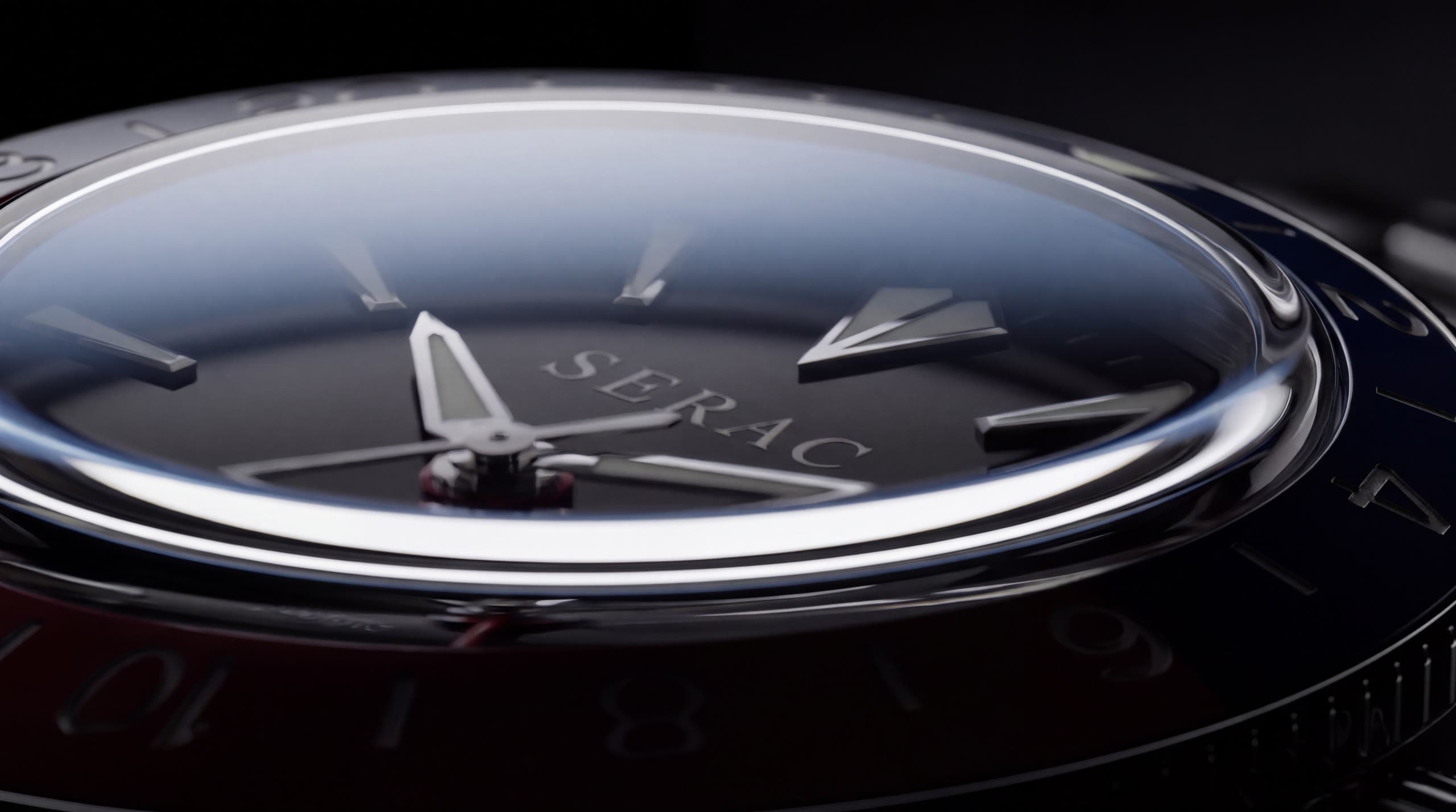
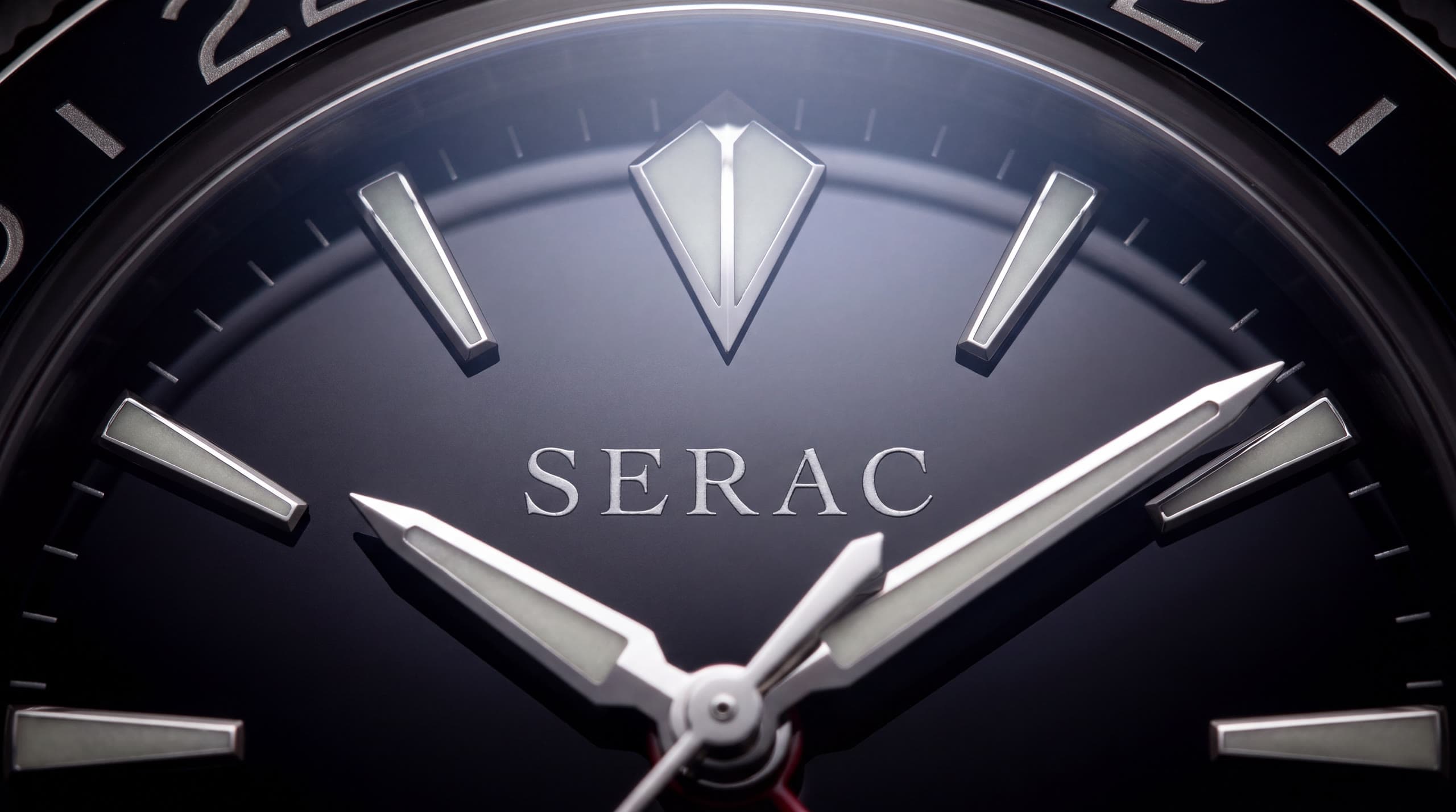
Faceted sword hands with lume channels, and a red arrow that keeps home time.
04Obsidian dial
Twelve coats of black lacquer under applied white-gold batons and the peak.
05Glacier Steel case
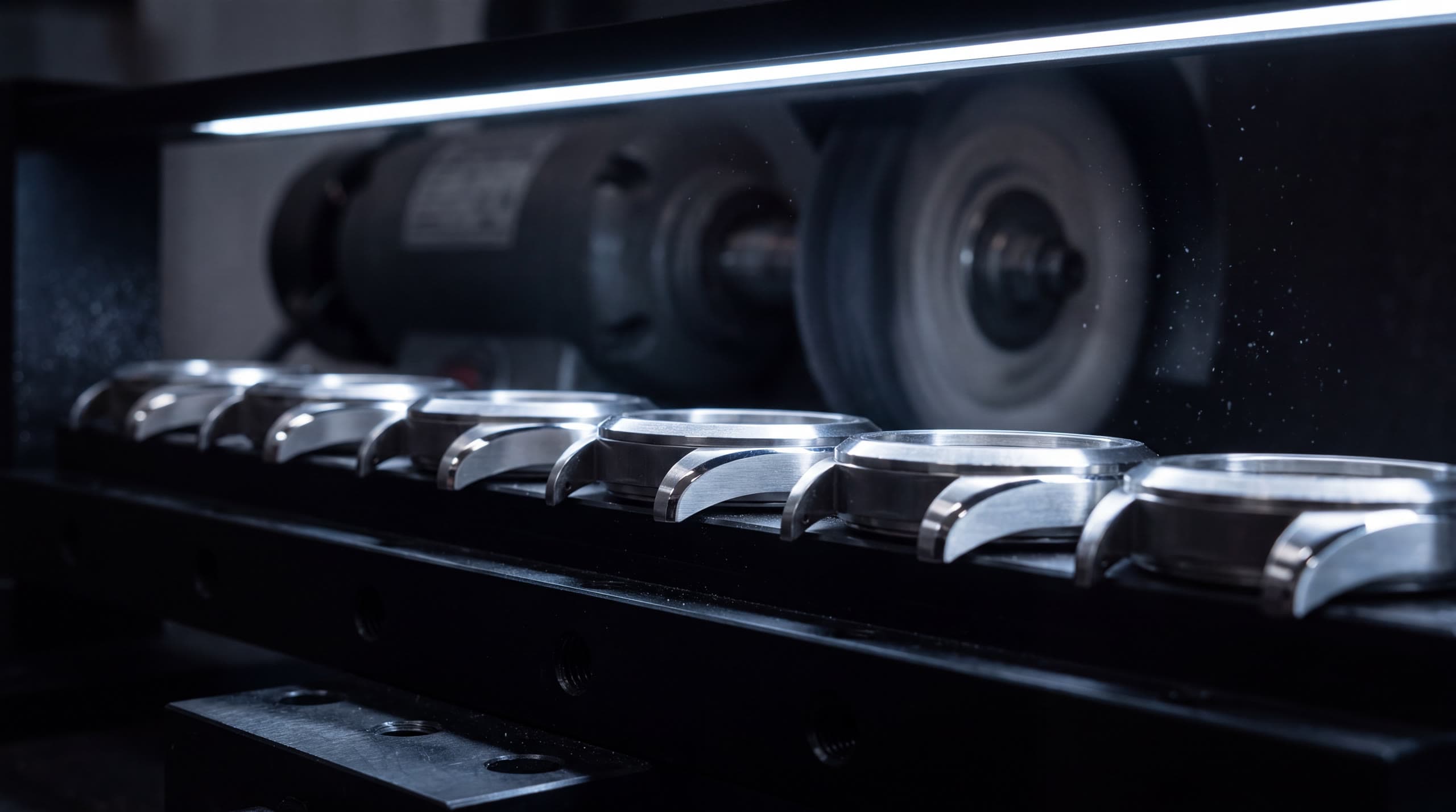
40.0 mm of vacuum-remelted 316L, brushed on top, polished on every bevel.
06Calibre SR-24
228 components, 31 jewels and 72 hours of reserve, beating at 4 Hz.
07Sapphire caseback
A second crystal, so the movement reads as clearly as the time.
§ 03
The calibre in seven numbers
Every value below is measured on a cased watch, not on a loose movement. Where a figure varies from piece to piece, we publish the limit it is not allowed to cross.
§ 04
Materials
Each was chosen for what it does after twenty years on a wrist, not for how it looks on the first day.
Material 01
ZrO₂ · 1,450 °C · 1,250 HV


Material 02
316L · Vacuum-arc remelted
Material 03
Al₂O₃ · Mohs 9 · Inner AR


Material 04
12 coats · 3 days · White gold
Material 05
1 watchmaker · 1 movement · 5 days
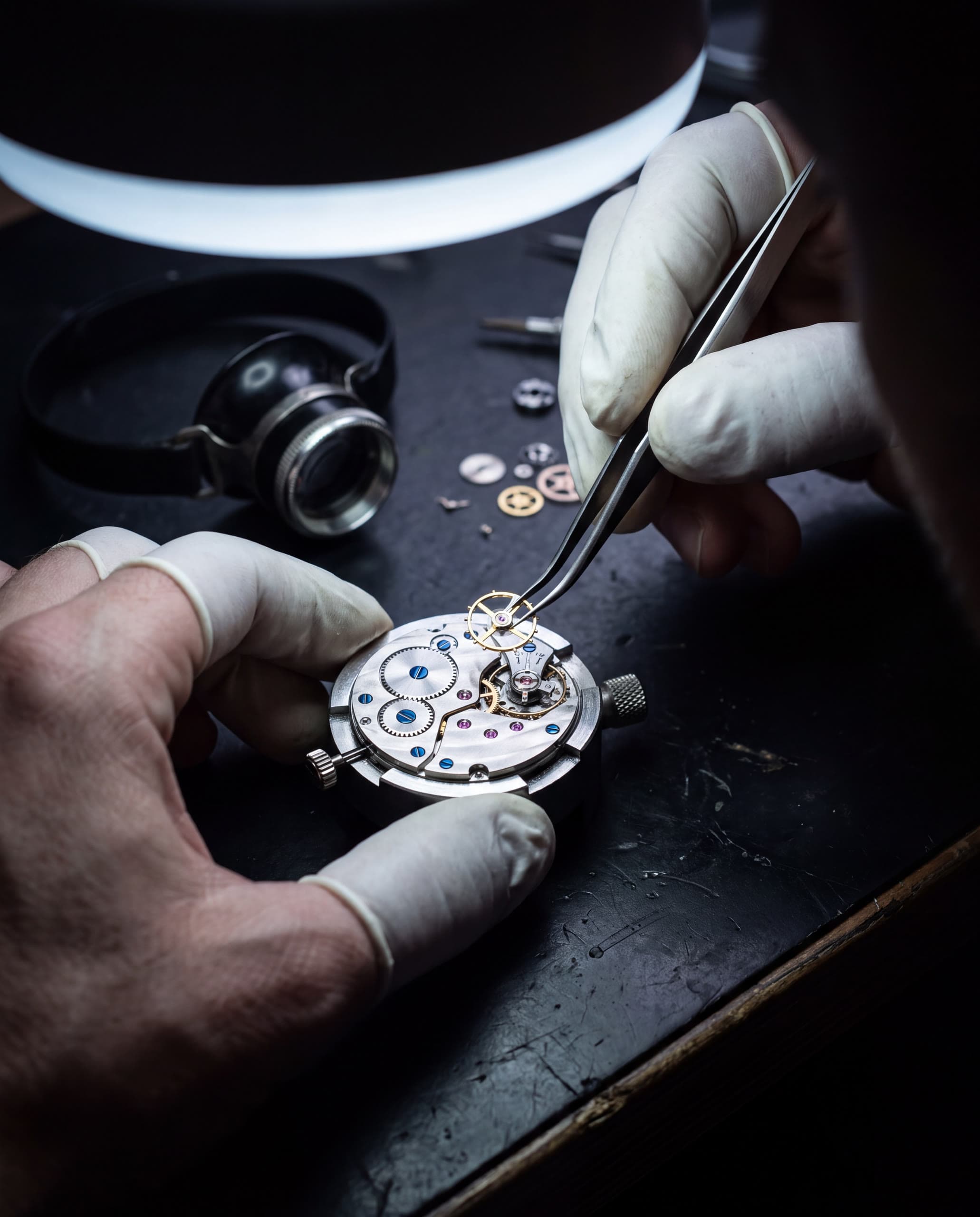
Everything above ends on one bench. The 228 components of each SR-24 are assembled, regulated and cased by the same pair of hands, from first screw to final seal.
Their initials are engraved under the rotor, where only a watchmaker will read them.

§ 05
The Glacier Protocol
Before a Traverse leaves Le Sentier it spends fifteen days cased and running on the bench, turned through six positions and three temperatures, measured every twenty-four hours. If it drifts beyond two seconds a day, either way, it goes back to its watchmaker.
Fig. 5.1 — A typical record. Every Traverse is delivered with its own.
Outer ring15 days, read clockwise from the top
GlyphsDU dial up · DD dial down · CU crown up · CD crown down · CL crown left · CR crown right
Stepped ringBench temperature, 8 · 23 · 38 °C
Inner bandDaily rate, −2 to +2 s · mean +0.2 s
§ 06
Finishing
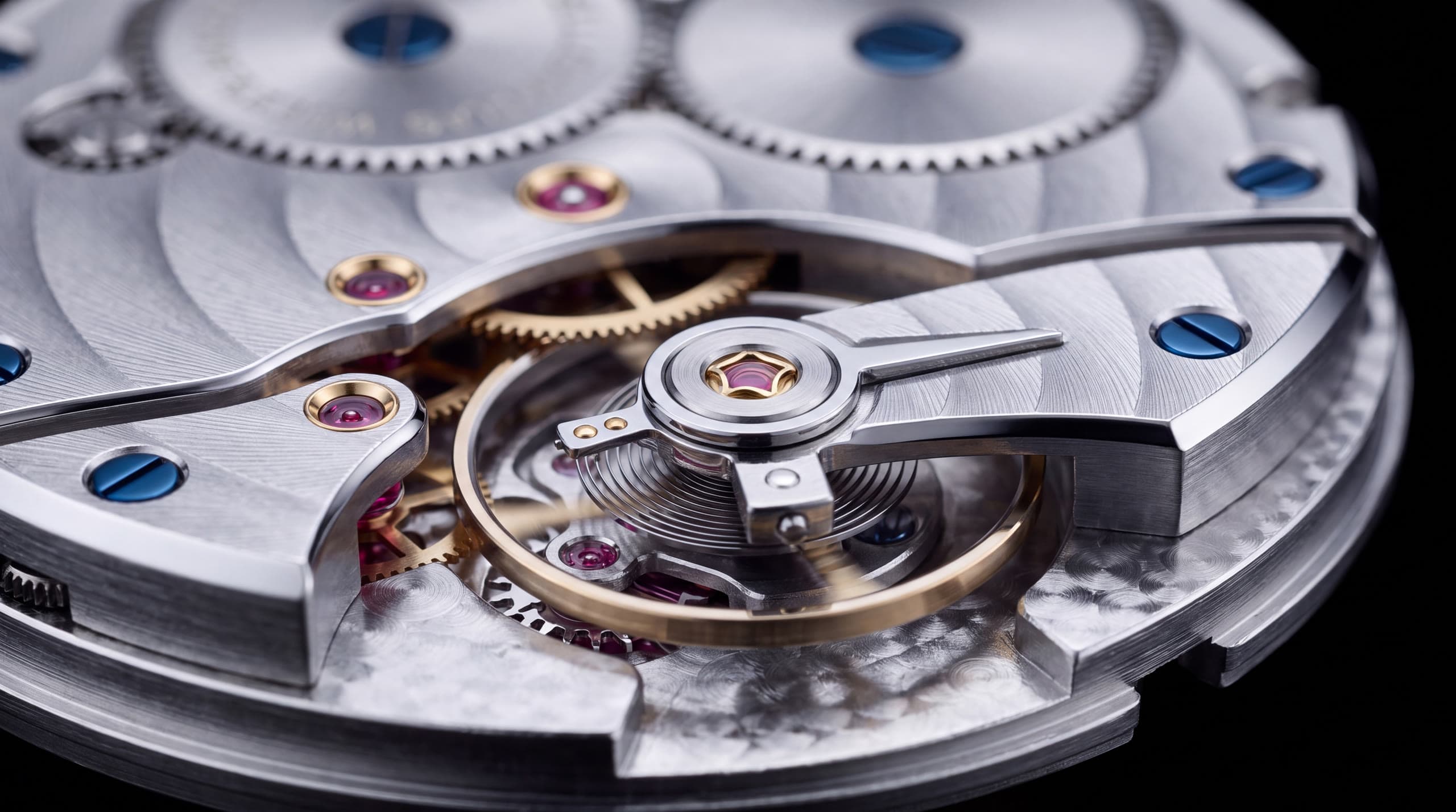
Most of the SR-24 sits under its rotor, against the wrist. It is finished as if it were on display, because through the caseback, it is.


Fig. 6.2 — Loupe
×1.0 · Balance side
Parallel waves cut across the bridges with a turning wheel, one pass per stripe. They catch the light, and hold dust away from the train.
Overlapping circles grained into the main plate with a turning peg, about 1,400 of them, each placed by hand.
Every bridge edge is bevelled at 45° and polished with gentian wood and diamond paste. Inward angles cannot be cut by machine.
Polished steel heated to 290 °C until it turns blue. The colour is an oxide layer, and it resists corrosion.
Tungsten, for weight at the rim. Cut open, so the calibre stays visible while the rotor winds it.
§ 07
Your Traverse
Four bezels, three dials, three straps. Every combination carries calibre SR-24 and leaves Le Sentier with its own Glacier Protocol record.